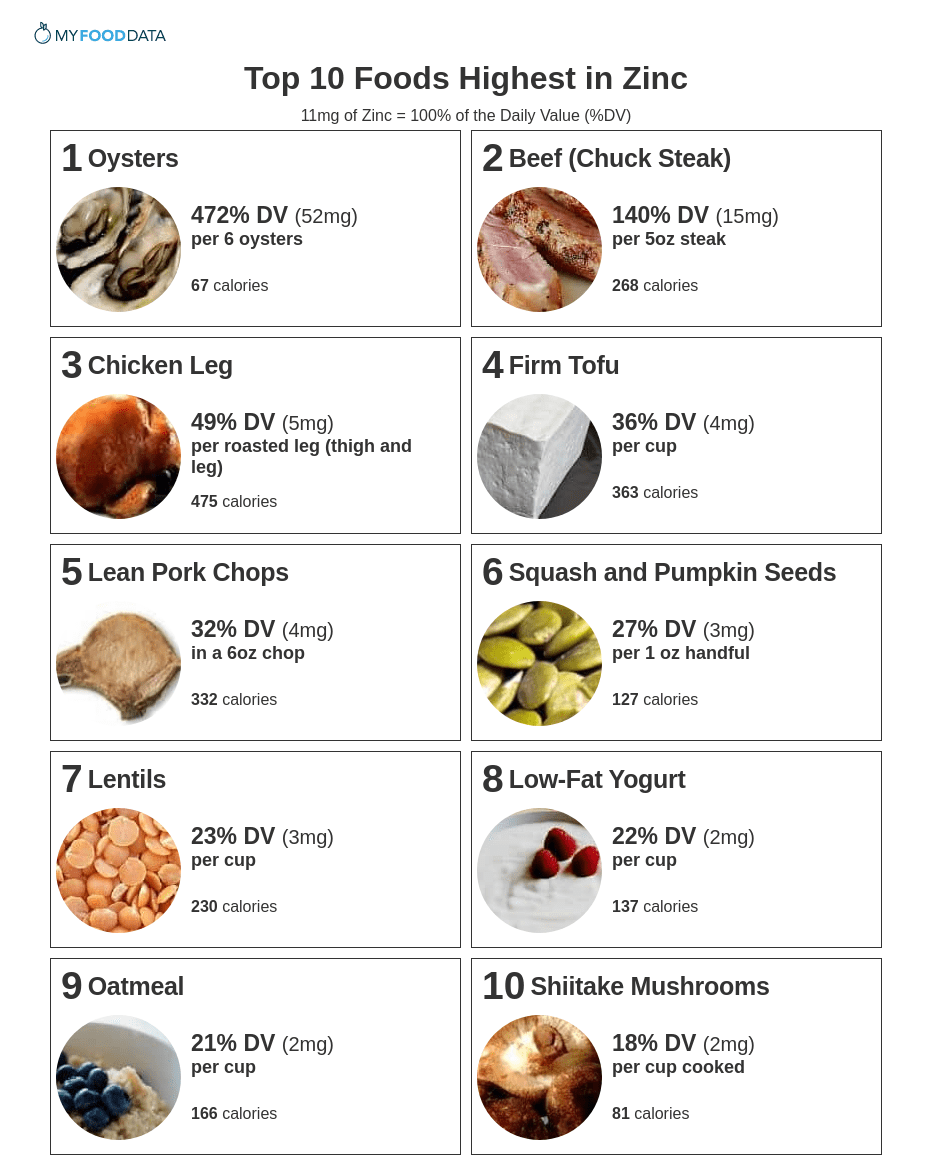
Top 10 Foods Highest in Zinc

Zinc is an essential mineral forming a component of more than 300 enzymes in the body with functions including wound healing, immune system function, building proteins and DNA, fertility in adults, and growth in children. Zinc is also needed for maintaining the senses of smell and taste.
A deficiency in zinc can lead to stunted growth, diarrhea, impotence, hair loss, eye and skin lesions, impaired appetite, and depressed immunity.
Conversely, consuming too much zinc can lead to nausea, vomiting, loss of appetite, abdominal cramps, diarrhea, and headaches in the short term, and can disrupt the absorption of copper and iron in the long term.
If you have a zinc deficiency, then animal foods are better sources of zinc than plant foods. (2)
Foods high in zinc include oysters, beef, chicken, tofu, pork, nuts, seeds, lentils, yogurt, oatmeal, and mushrooms. The current daily value (DV) for zinc is 11mg.
Below is a list of the top ten foods highest in zinc by common serving size, for more, see the lists of vegetarian zinc foods, high zinc vegetables, high zinc fruits, and high zinc nuts.-
 1. Oysters
Zinc
per 6 OystersZinc
per 100gZinc
per 200 Calories52mg
(472% DV)61mg
(555% DV)155mg
(1405% DV)Other Seafood High in Zinc
- 93% DV zinc in a king crab leg
- 47% DV in 20 small clams
- 47% DV in 1 cup of canned blue crab
- 31% DV in a 3oz serving of lobster
- 26% DV in a 3oz serving of octopus
See the full list of over 100 fish high in zinc.
-
 2. Beef (Chuck Steak)
Zinc
per 5oz SteakZinc
per 100gZinc
per 200 Calories15mg
(140% DV)11mg
(99% DV)12mg
(105% DV)More Red Meat High in Zinc
- 129% DV zinc in a ribeye steak
- 60% DV in 3oz of a chuck beef roast
- 46% DV in a 3oz hamburger patty
- 41% DV in 3oz of ground buffalo
- 39% DV in a 3oz lamb shank
See the full list of meats high in zinc.
-
 3. Chicken Leg
Zinc
per Roasted Leg (Thigh And Leg)Zinc
per 100gZinc
per 200 Calories5mg
(49% DV)2mg
(19% DV)2mg
(20% DV)More Poultry High in Zinc
- 33% DV in 1 cup of roast duck
- 27% DV in 3oz of roast turkey
- 23% DV in a chicken drumstick (leg)
See the full list of meats high in zinc.
-
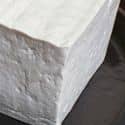 4. Firm Tofu
Zinc
per CupZinc
per 100gZinc
per 200 Calories4mg
(36% DV)2mg
(14% DV)2mg
(20% DV)More Soy Products High in Zinc
- 48% DV in 1 cup of natto
- 15% DV in 1 cup of green soybeans
- 14% DV in 1 cup of tempeh
See over 60 beans and legumes high in zinc.
-
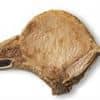 5. Lean Pork Chops
Zinc
in a 6oz ChopZinc
per 100gZinc
per 200 Calories4mg
(32% DV)2mg
(19% DV)2mg
(19% DV)More Pork Products High in Zinc
- 36% DV in 3oz of pork spare ribs
- 35% DV in a 3oz Boston steak
- 32% DV in 3oz of salami
- 25% DV in a Bratwurst Sausage
- 21% DV in 3oz of SPAM
See the full list of meats high in zinc.
-
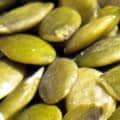 6. Squash and Pumpkin Seeds
Zinc
per 1 Oz HandfulZinc
per 100gZinc
per 200 Calories3mg
(27% DV)10mg
(94% DV)5mg
(42% DV)More Nuts and Seeds High in Zinc
- 17% DV per oz of pine nuts
- 14% DV per oz of cashews
- 13% DV per oz of sunflower seeds
See the top 10 nuts and seeds high in zinc.
-
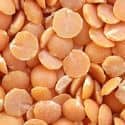 7. Lentils
Zinc
per CupZinc
per 100gZinc
per 200 Calories3mg
(23% DV)1mg
(12% DV)2mg
(20% DV)Beans High in Zinc
- 23% DV zinc in 1 cup of garbanzo beans (chickpeas)
- 22% DV in 1 cup of large white beans
- 20% DV in 1 cup of black-eyed peas
- 18% DV in 1 cup of navy beans
- 18% DV in 1 cup of black beans
See the full list of beans high in zinc.
-
 8. Low-Fat Yogurt
Zinc
per CupZinc
per 100gZinc
per 200 Calories2mg
(22% DV)1mg
(9% DV)3mg
(31% DV)More Dairy Foods High in Zinc
- 16%DV zinc per 16oz glass of milk
- 15% DV in 1/2 cup of low-fat ricotta
- 11% DV in a 1oz slice of Swiss cheese
- 11% DV in 1oz of grated parmesan
- 10% DV in 1oz of Gouda
See all dairy products high in zinc.
-
 9. Oatmeal
Zinc
per CupZinc
per 100gZinc
per 200 Calories2mg
(21% DV)1mg
(9% DV)3mg
(26% DV)Fortified breakfast cereals can provide 170% DV zinc per serving, but are not necessarily a healthier choice, as some can be high in added sugar and salt.
-
 10. Shiitake Mushrooms
Zinc
per Cup CookedZinc
per 100gZinc
per 200 Calories2mg
(18% DV)1mg
(12% DV)5mg
(43% DV)More Vegetables High in Zinc
- 17% DV zinc in 1 cup of green peas
- 12% DV in 1 cup of cooked spinach
- 12% DV in 1 cup of lima beans
For more see the top 10 high zinc vegetables.
 Next ➞
Printable One Page Sheet
Health Benefits of Zinc
- Healthy Immune Function - Even mild to moderate zinc deficiency can depress the immune system through impaired macrophage and neutrophil functions,and associated effects.(3) Zinc is also essential for creation and activation of T-lymphocytes.(4,5) Further, low levels of zinc have been associated with increased susceptibility to pneumonia and other infections in children and the elderly.(6-9)
- Alleviation of the Common Cold (*Controversial) - There are conflicting studies as to whether or not zinc supplements can alleviate symptoms of the common cold and shorten its duration. At least one study confirms decreased duration of cold symptoms compared to a control,(10) however, other studies report no effect.(11,12) Since no harm is reported, increasing zinc intake could only help.
- Healing of Cuts and Wounds - Zinc is essential for healthy skin and maintenance of mucosal membranes. Adequate levels of zinc is necessary for proper wound healing.(13)
- Reduced Severity and Duration of Diarrhea - Studies show that increased intake of zinc can reduce duration and severity of diarrhea in undernourished children with infections.(14-17)
- Prevention and Reduction of Age-Related Eye Damage - High dietary intake of zinc, as well as vitamins C, E, and beta-carotene, has been associated with reduced age-related macular degeneration in the elderly.(18)
High Risk Groups for a Zinc Deficiency
- Alcoholics - 30-50% of alcoholics have low levels of zinc because alcohol decreases zinc absorption and increases urinary secretion of zinc.
- Vegetarians - The bio-availability of zinc is higher in meats and thus more easily absorbed. Further, legumes and whole grains contain phytates which bind zinc and inhibit absorption. Vegetarians should aim to eat 50% DV more zinc each day to ensure proper levels. For more vegetarian sources of zinc see the lists of vegetarian zinc foods, high zinc fruits and high zinc vegetables.
- Pregnant and Lactating Women - A developing fetus requires a high amount of zinc, likewise, there is a high amount of zinc lost through breast milk after birth.
- Older Infants who are Exclusively Breastfed - Infants older than 6 months should eat age-appropriate foods which provide zinc as the amount in breast milk is no longer ample.
- People with Sickle Cell Disease - For unknown reasons 44% of children, and 60-70% of adults with sickle cell disease have low levels of zinc.
- People with Gastrointestinal and Other Diseases - Gastrointestinal surgery, Crohn's disease, ulcerative colitis, short bowel syndrome and other digestive diseases can all decrease zinc absorption and increase zinc loss from the body.
- People consuming high doses of Iron Supplements - Iron can interfere with zinc absorption, to reduce this effect, iron supplements should be taken between meals to allow time for zinc to be absorbed properly.
- People taking Diuretics - Thiazide diuretics such as chlorthalidone (Hygroton) and hydrochlorothiazide (Esidrix and HydroDIURIL) can increase zinc excretion by 60%, and over the long term, deplete body tissues of zinc stores. Be sure to consult your doctor or clinician to monitor your zinc level if you are taking these diuretics for a sustained period of time, and be sure to eat more zinc-rich foods.
About the Data
Data for the curated food lists comes from the USDA Food Data Central Repository.
You can check our data against the USDA by clicking the (Source) link at the bottom of each food listing.
Note: When checking data please be sure the serving sizes are the same. In the rare case you find any difference, please contact us and we will fix it right away.
About Nutrient Targets
Setting targets can provide a guide to healthy eating.
Some of the most popular targets include:- Daily Value (%DV) - The daily value (%DV) is a general guideline for consumption that will prevent deficiency of a particular nutrient in most people. The %DV refers to the percentage of an amount that\'s found in a single serving of a food. It also accounts for absorption factors. It is set by the U.S. FDA.
- Recommended Dietary Allowance (%RDA) - The RDA sets an average daily dietary intake level that is sufficient to meet the nutrient requirements of nearly all (97.5%) healthy individuals. It\'s more specific than the daily value, and varies by age and gender. The RDA is set by the US National Institutes of Health.
- Reference Dietary Intake (%RDI) -The reference dietary intake is similar to the recommended daily allowance, but is specific to age and gender. The RDI for amino acids is set by the U.N. World Health Organization.
- Adequate Intake (%AI) - This value is primarily used in reference to omega-3 and omega-6 fats. The Adequate Intake is set by the U.S. Institute of Medicine. Because there is less evidence to determine the ideal targets for consumption of these nutrients, the specific amount is considered to be less reliable. Using the term Adequate Intake, rather than one of the other terms, helps to emphasize that the ideal intake of that particular nutrient has not yet been scientifically determined.
See the Guide to Recommended Daily Intakes for more information.
Want to set your own targets? Sign up for an account and set custom targets in the daily food log.From the Nutrient Ranking Tool
Use the ranking tool links below to select foods and create your own food list to share or print.
- Foods High in Zinc
- Foods Low in Zinc
- Vegetables High in Zinc
- Fruits High in Zinc
- Vegetarian Foods High in Zinc
- Nuts High in Zinc
- Grains High in Zinc
- Beans High in Zinc
- Dairy High in Zinc
- Breakfast Cereals High in Zinc
- Fast Foods High in Zinc
View more nutrients with the nutrient ranking tool, or see ratios with the nutrient ratio tool.
Related
Data Sources and References
- U.S. Agricultural Research Service Food Data Central
- Office Of Dietary Supplements Fact Sheet
- Wintergerst ES, Maggini S, Hornig DH. Contribution of selected vitamins and trace elements to immune function. Ann Nutr Metab 2007;51:301-23.
- Institute of Medicine, Food and Nutrition Board. Dietary Reference Intakes for Vitamin A, Vitamin K, Arsenic, Boron, Chromium, Copper, Iodine, Iron, Manganese, Molybdenum, Nickel, Silicon, Vanadium, and Zinc. Washington, DC: National Academy Press, 2001.
- Beck FW, Prasad AS, Kaplan J, Fitzgerald JT, Brewer GJ. Changes in cytokine production and T cell subpopulations in experimentally induced zinc-deficient humans. Am J Physiol 1997;272:E1002-7.
- Bahl R, Bhandari N, Hambidge KM, Bhan MK. Plasma zinc as a predictor of diarrheal and respiratory morbidity in children in an urban slum setting. Am J Clin Nutr 1998;68 (2 Suppl):414S-7S.
- Brooks WA, Santosham M, Naheed A, Goswami D, Wahed MA, Diener-West M, et al. Effect of weekly zinc supplements on incidence of pneumonia and diarrhoea in children younger than 2 years in an urban, low-income population in Bangladesh: randomized controlled trial. Lancet 2005;366:999-1004.
- Meydani SN, Barnett JB, Dallal GE, Fine BC, Jacques PF, Leka LS, et al. Serum zinc and pneumonia in nursing home elderly. Am J Clin Nutr 2007;86:1167-73.
- Black RE. Zinc deficiency, infectious disease and mortality in the developing world. J Nutr 2003;133:1485S-9S.
- Prasad AS, Beck FW, Bao B, Snell D, Fitzgerald JT. Duration and severity of symptoms and levels of plasma interleukin-1 receptor antagonist, soluble tumor necrosis factor receptor, and adhesion molecules in patients with common cold treated with zinc acetate. J Infect Dis 2008 ;197:795-802.
- Turner RB, Cetnarowski WE. Effect of treatment with zinc gluconate or zinc acetate on experimental and natural colds. Clin Infect Dis 2000;31:1202-8.
- Eby GA, Halcomb WW. Ineffectiveness of zinc gluconate nasal spray and zinc orotate lozenges in common-cold treatment: a double-blind, placebo-controlled clinical trial. Altern Ther Health Med 2006;12:34-8.
- Wintergerst ES, Maggini S, Hornig DH. Contribution of selected vitamins and trace elements to immune function. Ann Nutr Metab 2007;51:301-23.
- Black RE. Therapeutic and preventive effects of zinc on serious childhood infectious diseases in developing countries. Am J Clin Nutr 1998;68:476S-9S.
- Bhutta ZA, Bird SM, Black RE, Brown KH, Gardner JM, Hidayat A, et al. Therapeutic effects of oral zinc in acute and persistent diarrhea in children in developing countries: pooled analysis of randomized controlled trials. Am J Clin Nutr 2000;72:1516-22.
- Lukacik M, Thomas RL, Aranda JV. A meta-analysis of the effects of oral zinc in the treatment of acute and persistent diarrhea. Pediatrics 2008;121:326-36.
- Fischer Walker CL, Black RE. Micronutrients and diarrheal disease. Clin Infect Dis 2007;45 (1 Suppl):S73-7.
- Van Leeuwen R, Boekhoorn S, Vingerling JR, Witteman JC, Klaver CC, Hofman A, et al. Dietary intake of antioxidants and risk of age-related macular degeneration. JAMA 2005;294:3101-7.
Try the recipe nutrition calculator, or daily meal planner.
Create a free account to log and track foods.